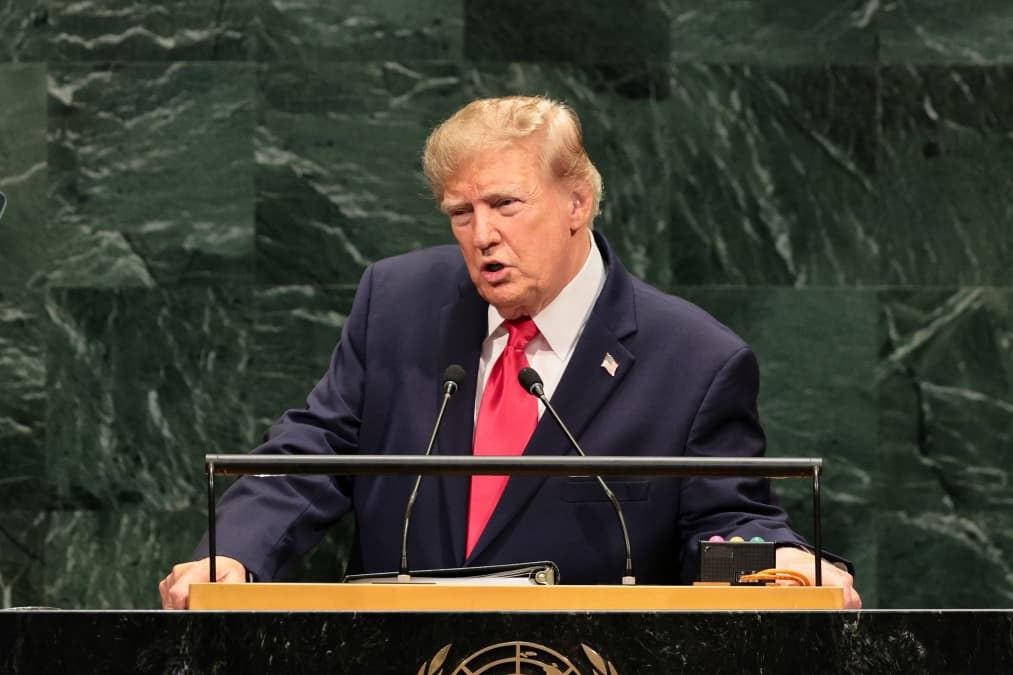
President Donald Trump has rejected Iran's conditional proposal for reopening the Strait of Hormuz, telling aides he expects to resume bombing the country after November's midterm elections, The Wall Street Journal reported Saturday, quoting unnamed U.S. officials.
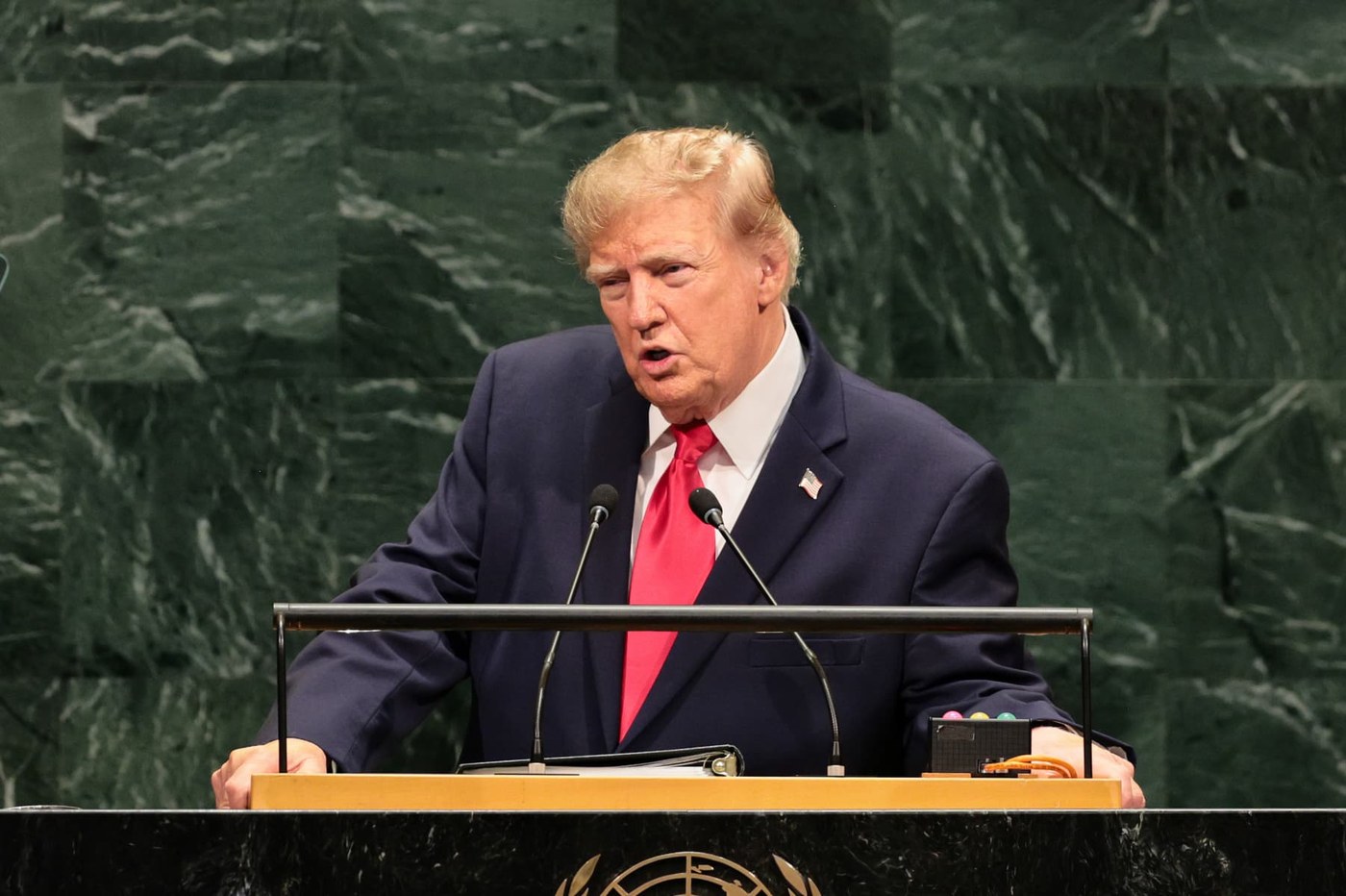
In a gaggle with reporters later on Saturday, Trump confirmed he had rejected Iran's latest offer: "They made a proposal but I rejected it."
Meanwhile, Yemen's Saudi-led coalition forces said they intercepted projectiles fired by Iran-backed Houthi rebels.
Iranian Foreign Minister Abbas Araghchi on Friday proposed reopening the strategically vital strait and resuming nuclear talks with the U.S. within seven days if the Trump administration accepts its conditions.
"If certain conditions are met, the Strait of Hormuz will be open at the end of seven days, and talks will be restarted," Araghchi told reporters on the sidelines of the United Nations General Assembly in New York.
Tehran's conditions include a halt to what it calls U.S. "acts of aggression," an end to the naval blockade and economic warfare, and the release of Iranian assets, Iranian foreign ministry spokesman Esmaeil Baghaei said this week.
Trump said earlier this month that he expects the war, which began on Feb. 28 with U.S. and Israeli airstrikes on Iran, to end shortly after the midterms and for oil prices to fall afterward.
But privately, Trump is skeptical Iran would meet his demands and has told his staff that he sees a renewed bombing campaign as likely, the WSJ quoted officials as saying.
CNBC could not immediately confirm the report.
The Journal quoted a U.S. official as saying Washington and Tehran were still negotiating through mediators, including over U.S. demands intended to prevent Iran from developing a nuclear weapon.
'Intercepted and destroyed'
Though direct fighting between U.S. and Iranian forces has been greatly reduced in recent weeks, Iran-backed Houthi rebels in Yemen have stepped up their attacks on their neighbor and U.S. ally Saudi Arabia.
The Saudi-backed Coalition to Support Legitimacy in Yemen "intercepted and destroyed" two drones launched by Houthi militia towards the Saudi capital Riyadh, and two ballistic missiles aimed at the Khamis Mushait region near the city of Abha in the country's southwest, Colonel Turki Al-Maliki, the coalition's official spokesman, said in a series of posts on X.
The Houthis said last Saturday that they had attacked "sensitive" sites in Riyadh shortly after flames and smoke were seen near the city's main airport. Saudi Arabia said earlier this month that its air defenses destroyed a Houthi drone headed for the holy city of Mecca, a claim the group denied.
The war has severely restricted energy shipments out of the Middle East, sending oil prices soaring and raising concerns about accelerating inflation globally.
But crude prices posted a sharp drop for the week as Tehran and Washington held discussions on the sidelines of the U.N. General Assembly.
West Texas Intermediate dropped 2.3% to close at $92.41 per barrel. Brent, the international benchmark, declined 2.1% to settle at $104.32. U.S. crude finished the week 7.9% lower while Brent was flat.
WTI is up nearly 61% year to date, while Brent crude is more than 71% higher over the same period.