- SpaceX and NVIDIA announced a partnership to jointly develop the compute payload for the Starmind AI1 satellite, using NVIDIA's Rubin GPUs and Vera CPUs.
- SpaceX boosted the AI1's peak power by 67% to approximately 250 kW, enough to support a full NVIDIA Vera Rubin NVL72 rack containing 72 GPUs.
- The company envisions a constellation of up to 1 million AI satellites operating as distributed compute nodes in low Earth orbit.
- Prototype testing is scheduled for early 2027, with mass production planned for later that year.
- The announcement came hours before SpaceX reported Q2 2026 earnings, with revenue jumping 92% to $7.8 billion.
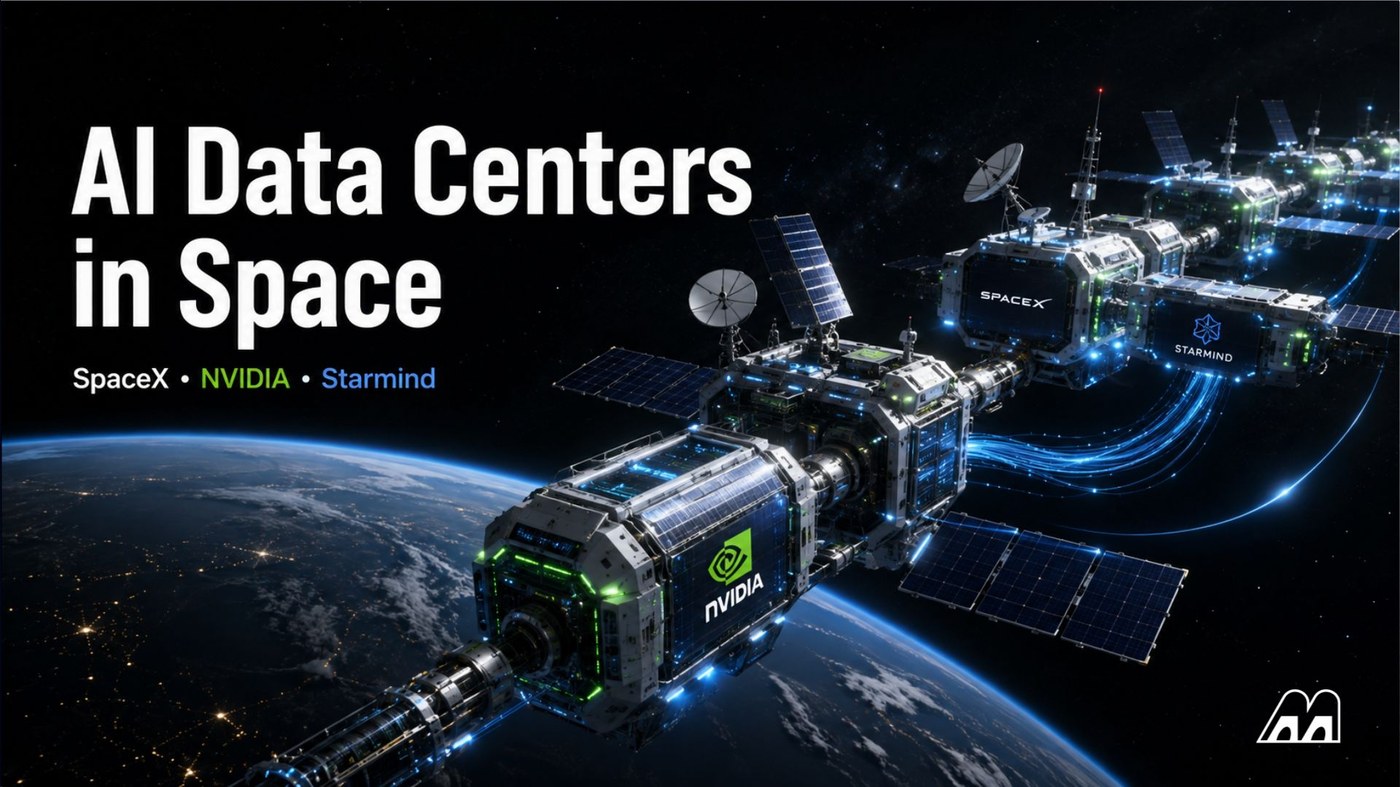
SpaceX and NVIDIA have formalized a partnership to design the compute payload for SpaceX’s Starmind AI1 satellite, a spacecraft built to run artificial intelligence workloads directly from low Earth orbit.
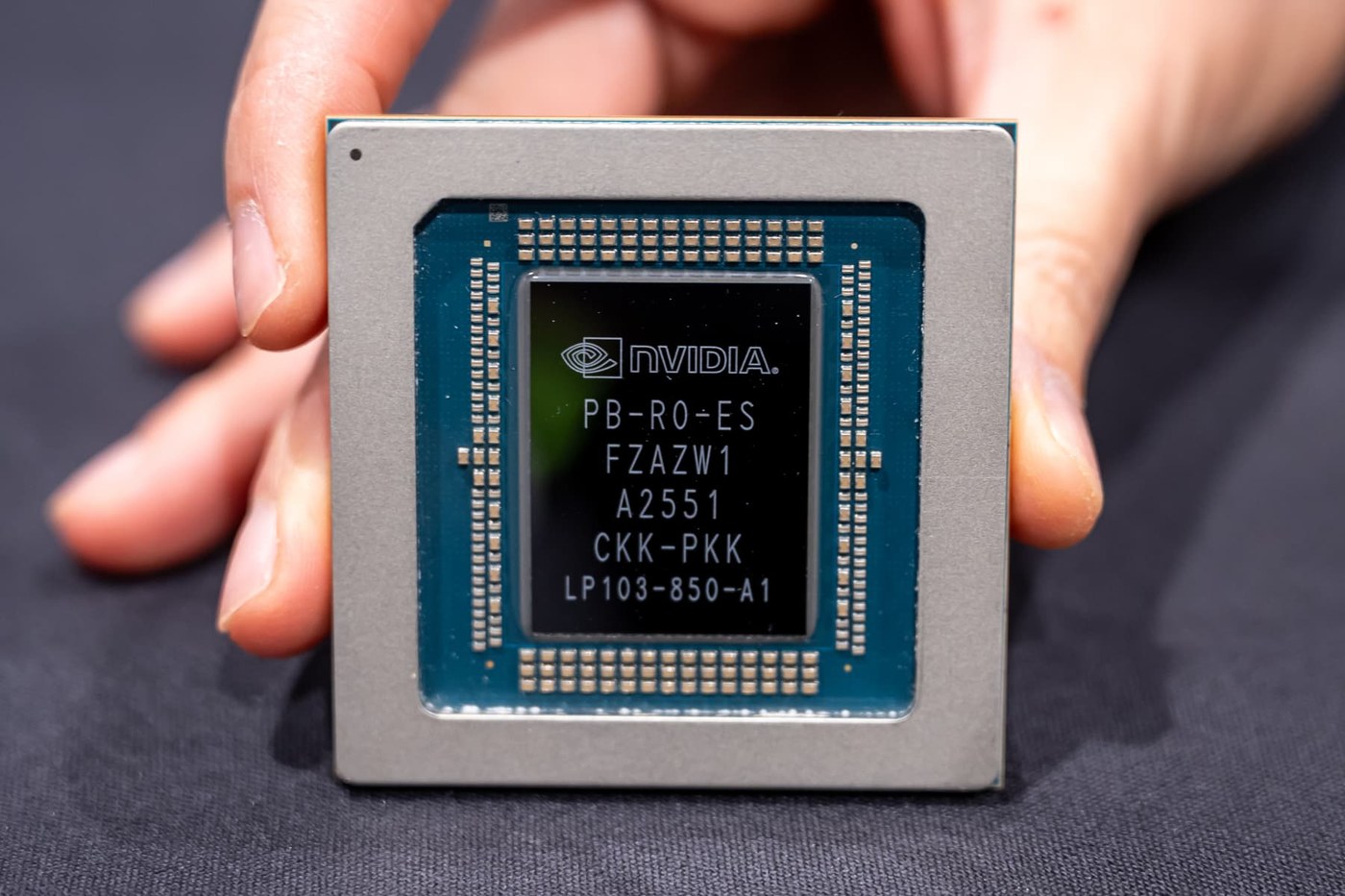
The announcement, made on August 4, 2026, confirmed that each Starmind satellite will be equipped with NVIDIA Rubin GPUs and Vera CPUs, according to SpaceX’s official statement. NVIDIA separately confirmed that the AI1’s compute payload will be powered by its Vera Rubin NVL72 system, describing the move as bringing “AI factory compute closer to the stars.”
This isn’t just a hardware deal. The long-term vision is a constellation of up to 1 million AI satellites, each operating as an independent compute unit. Together, they would form a planet-scale distributed AI supercomputer in orbit.
What Is the Starmind AI1 Satellite?
The AI1 is the first-generation satellite in SpaceX’s Starmind constellation. Unlike Starlink satellites, which relay communications signals, Starmind satellites are designed as orbital server racks that process AI workloads directly in space.
SpaceX recently upgraded the AI1’s power specifications significantly. The satellite’s peak output jumped 67%, going from the originally announced 150 kW to roughly 250 kW with battery assist. Average continuous power also rose 33%, from 120 kW to 160 kW, according to reporting on Musk’s confirmation of the upgrade.
The boosted power budget is specifically designed to accommodate a full NVIDIA Vera Rubin NVL72 rack, which packs 72 Rubin GPUs into a single system. NVIDIA says the Space-1 Vera Rubin Module delivers up to 25 times the AI compute of an H100 GPU, its previous-generation flagship chip.
- Height: 20 meters when fully deployed
- Wingspan: 70 meters (wider than a Boeing 747 fuselage), primarily solar arrays
- Cooling: 110 m² of deployable liquid radiators with redundant pumping loops
- Compute payload: Modular and interchangeable, allowing SpaceX to swap in different chip providers as technology evolves
Data processed onboard travels back to Earth through Starlink’s existing laser link network, giving the system a high-bandwidth return path without requiring separate ground infrastructure.
Why Move AI Compute to Space?
The rationale behind Starmind centers on the growing bottlenecks facing terrestrial AI data centers.
Ground-based AI infrastructure faces mounting challenges from power grid limitations, land acquisition constraints, massive cooling requirements, and increasingly lengthy permitting processes. SpaceX’s pitch is that space solves several of these problems simultaneously.
Starmind satellites are designed to fly in sun-synchronous orbit, where solar energy is both plentiful and predictable throughout the year. The vacuum of space provides natural thermal advantages, eliminating the need for power-hungry cooling systems that consume significant portions of a terrestrial data center’s energy budget. And there is no zoning board in orbit.
Elon Musk stated during SpaceX’s Q2 2026 earnings call that the company will build its AI infrastructure exclusively on NVIDIA platforms, describing Vera Rubin as the strongest available option, according to Yahoo Finance. SpaceX also indicated it expects roughly 10% of its compute capacity to be used for Grok training, the large language model it acquired through its merger with xAI earlier this year.
How SPCX and NVDA Reacted to the News
The Starmind announcement dropped just hours before SpaceX released its first-ever quarterly earnings report as a public company, creating a complex picture for SpaceX stock.
SPCX gained roughly 9.4% during the regular trading session on August 4, climbing to $125.33. NVIDIA shares rose approximately 2.5% on the same day. However, the mood shifted after hours. SPCX fell about 8.6% in extended trading to around $114.60 as investors digested the earnings details and the company’s heavy spending plans.
- Revenue: $7.81 billion, up 92% year-over-year (beat the $6.93 billion estimate)
- EPS: Loss of $0.09 per share (better than the expected loss of $0.26)
- Adjusted EBITDA: $3.5 billion, up 191% year-over-year
- Connectivity (Starlink): $4.3 billion revenue, up 66% YoY, with 12 million subscribers
- AI segment: $2.56 billion revenue, up 247% YoY
- Space segment: $962 million, up 29% YoY
The after-hours selloff appeared driven less by the numbers themselves and more by the scale of capital expenditures. SpaceX reported $18.4 billion in capex for the quarter, reflecting aggressive investment in Starship, Starlink expansion, and now Starmind infrastructure.
An insider lockup is also set to expire this week, potentially releasing upward of $100 billion in shares onto the open market and adding another layer of near-term pressure on the stock.
CFO Bret Johnsen said during the earnings call that SpaceX expects to hit a $100 billion annualized revenue run rate before the year ends. He added that the company recently signed $6.7 billion worth of new cloud services contracts, with revenue from those deals set to begin ramping in October.
Timeline and What Comes Next
SpaceX plans to begin prototype testing of the Starmind AI1 satellite in early 2027. If development stays on schedule, mass production would start later that year out of a new facility called Gigasat.
The FCC has granted an initial application for the Starmind constellation but has not issued a final decision on the full deployment. SpaceX filed with the FCC in January 2026 to launch and operate up to 1 million compute satellites.
The partnership builds on NVIDIA’s broader push into orbital computing. At its GTC conference in March 2026, Jensen Huang unveiled the Vera Rubin Space-1 Module and announced partnerships with Aetherflux, Axiom Space, Kepler Communications, Planet Labs, Sophia Space, and Starcloud. SpaceX was not initially part of that announcement but has now joined as arguably the most significant partner in NVIDIA’s orbital compute ecosystem.
Whether SpaceX can actually scale a million-satellite AI constellation remains an open question. The economics hinge heavily on Starship achieving full and rapid reusability at a pace that makes per-satellite launch costs viable. But with $7.8 billion in quarterly revenue, a formalized NVIDIA partnership, and a dedicated Starmind website, the project has clearly moved beyond the concept stage.
FAQs
What is SpaceX Starmind?
Starmind is SpaceX’s planned constellation of AI-focused satellites designed to operate as distributed orbital data centers. Unlike Starlink satellites that relay internet signals, Starmind satellites process AI workloads directly in space using datacenter-class hardware.
What hardware does the Starmind AI1 use?
The Starmind AI1 satellite uses NVIDIA’s Vera Rubin NVL72 system, which combines Rubin GPUs and Vera CPUs. Each NVL72 rack contains 72 Rubin GPUs and delivers up to 25 times the AI compute of NVIDIA’s previous-generation H100 chip.
When will Starmind satellites launch?
SpaceX plans prototype testing for early 2027, with mass production expected to begin later that year. The company has filed with the FCC to deploy up to 1 million Starmind satellites.
How does SpaceX stock react to the Starmind news?
SPCX gained about 9.4% during regular trading on August 4, 2026, following the NVIDIA partnership announcement. However, the stock dropped approximately 8.6% after hours as investors reacted to heavy capital expenditures reported in SpaceX’s first post-IPO earnings.
Why build data centers in space?
Orbital data centers bypass terrestrial constraints like power grid limitations, land costs, cooling requirements, and permitting delays. Solar energy is abundant in orbit, the vacuum of space aids cooling, and there are no land acquisition barriers.