Newsflash: The pound has hit its highest level since its crash after the Brexit referendum a decade ago.
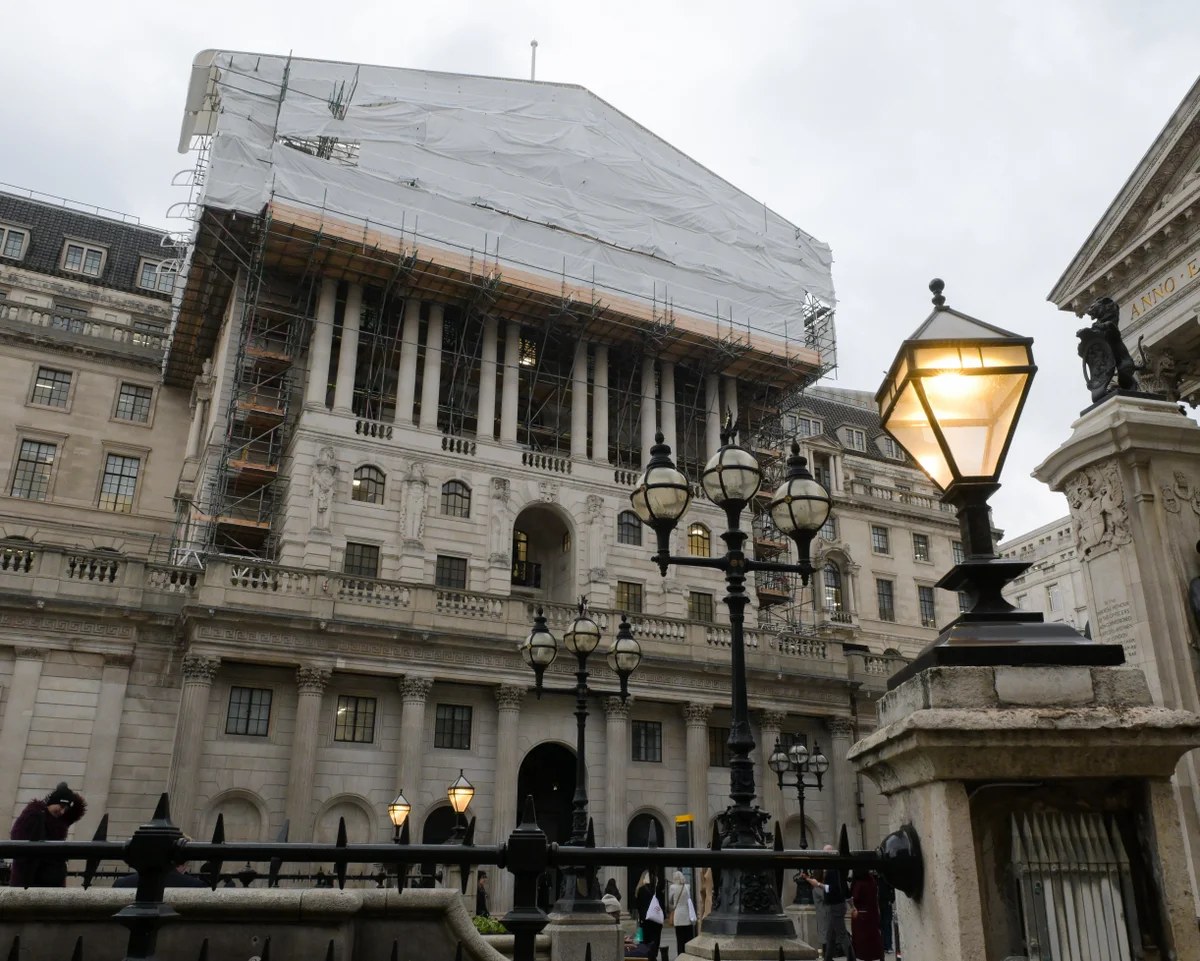
Data released by the Bank of England shows that the pound reached its strongest level against a basket of other currencies since 23 June 2016 – the day of the EU vote - yesterday.
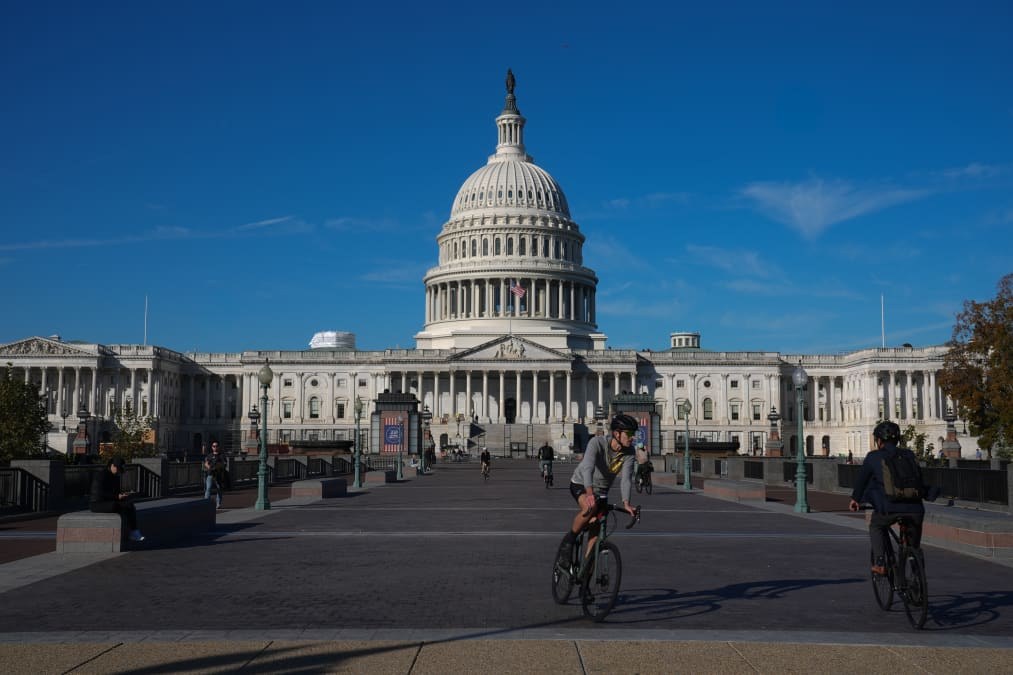
This follows the drop in the value of the US dollar after the Midterm elections, but also reflects the pound’s recent strength against other currencies such as the euro and the yen.
The pound has also benefited from expectations that the BoE will raise interest rates at noon today, which makes it more lucrative for investors to hold funds in sterling.
The dollar weakened generally yesterday, amid a risk-on rally that saw money flow into other currencies.
When it came to the market reaction, there was relief among investors that the results weren’t disputed, which helped to reduce political uncertainty. Moreover, the prospect of divided government also eased concerns about the fiscal trajectory, given it’ll now be more difficult to pass tax cuts or spending packages.
Today’s 10-year high relates to the sterling “effective exchange rate index” (EERI), which tracks the pound against a basket of other currencies.
Calculated by the Bank of England, this index has now hit 86.5372.
On the index, 100 equals the value of the pound in January 2005.
Why Trump’s midterms defeat has pushed down energy prices
Oil markets sold off aggressively because the political power shift within the US could lead to “more scrutiny over the war, while funding it could become more difficult”, according to market analysts at Dutch bank ING.
“How all this plays out is still highly uncertain,” ING’s analysts added. “Therefore, the degree and speed to which the oil market has sold off seems to be overdone.”
ProfessorBrendaShaffer, a senior fellow at the AtlanticCouncilGlobalEnergyCenter, told the Guardian that although the Democrats won support by galvanising the public opposition to rising energy costs they would struggle to address the crisis that helped the party to victory.
“They may blame the Republicans for the closure of the Strait of Hormuz, and continue to do so, but why would Iran compromise now?”
She added that the record high diesel prices in the US which have pushed up costs across the economy may also prove difficult to tackle if Democrats are unwilling to curtail Ukraine’s military attacks on energy infrastructure in Russia, one of the world’s biggest diesel exporters.
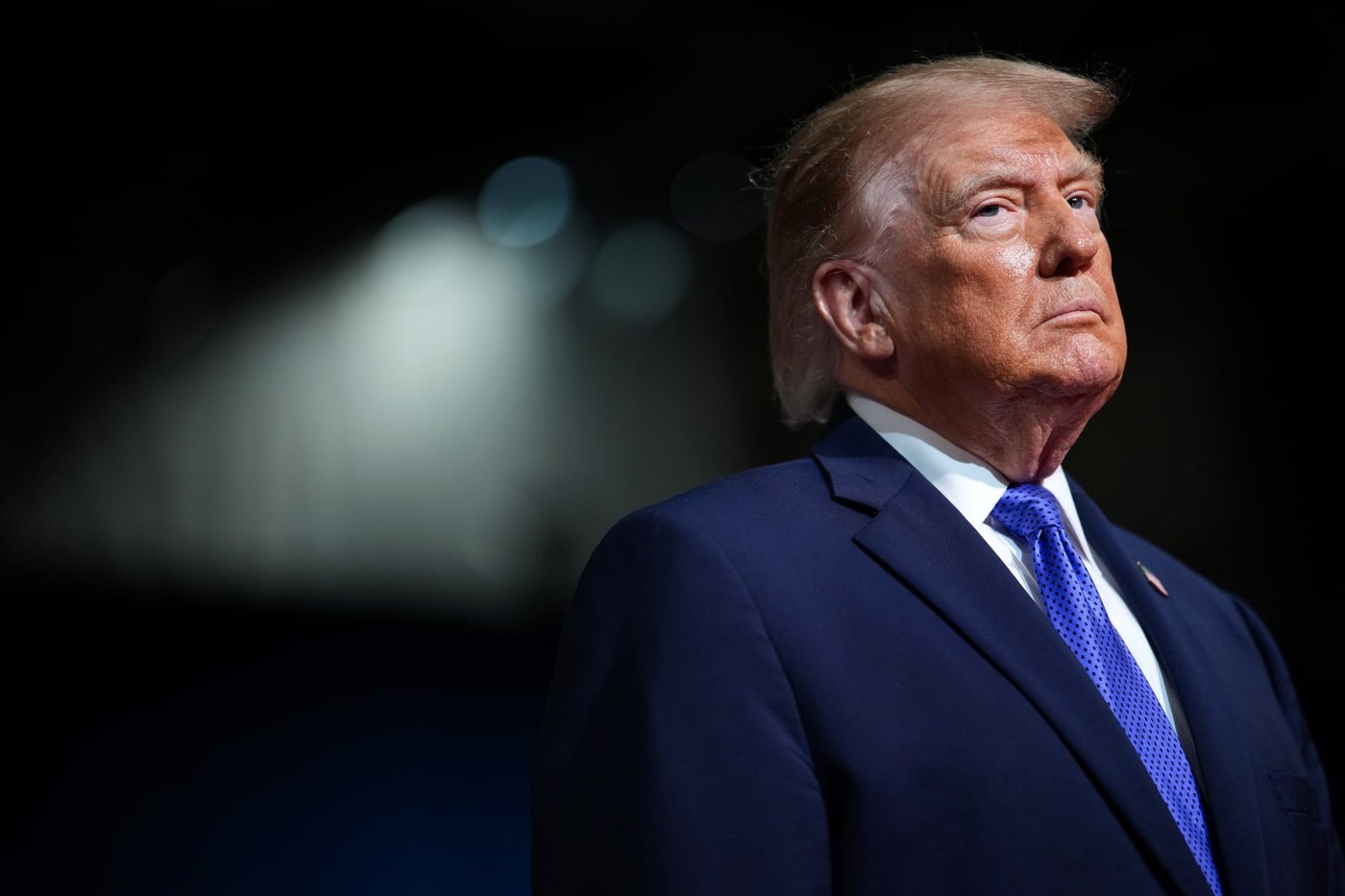
Donald Trump’s mid-term election defeat has caused Europe’s gas prices to tumble as global energy markets bet on a quicker than expected resolution to the strait of Hormuz crisis.
The market price for oil, gas and fuels across global markets plummeted after the US President conceded that the US-Israeli war on Iran had angered voters and caused his part to lose control of the House of Representatives and the Senate.
The admission triggered oil and gas prices to fall sharply as the election results emerged on the hope that the result may galvanise US efforts to end the conflict, which has disrupted energy supplies through the strait of Hormuz for over 8 months.
Europe’s gas benchmark fell to three week lows of €84.36 per megawatt hour on Thursday after climbing to a four year high of almost €104 per megawatt hour late last week as colder weather prompted companies to begin drawing from Europe’s historically low gas storage facilities.
Europe’s gas stores are only around 74% full, well below the five-year seasonal average of 90%. In Germany, Europe’s biggest economy and home to the EU’s largest gas stores, gas reserves stand at below 61%.
The gas market slump followed a sharp drop in the global oil benchmark, Brent crude, which fell 8.7% lower on Wednesday to below $95 a barrel, its lowest price in two months.
The pound might strengthen today, depending on what the Bank of England says at lunchtime.
With a rate hike widely expected, the City will be more interested in how united Bank policymakers are on the decision, and what guidance the BoE gives about future rate hikes.
Charalampos Pissouros, senior market analyst at TradingPoint, explains:
As for the pound, traders are keeping their gaze locked on the Bank of England decision today. With UK inflation accelerating to 3.5% year-on-year in September, investors are nearly certain that policymakers will raise rates for the first time since August 2023.
Therefore, the pound is unlikely to be driven by the hike itself, but by the vote, the updated economic projections and the guidance on further tightening. A unanimous vote for an increase, upwardly revised inflation projections and strong willingness to continue with more rate increases could add fuel to sterling’s engines.
Ouch! Activity in the UK’s construction sector fell sharply last month, new data shows.
The latest ConstrutionPMI report, just relased, shows there was a “sharp and accelerated reduction in business activity during October”.
Housebuilding work slumped in the month, the report says:
Residential activity (index at 35.1) was by far the weakest performing segment, with the latest reading the lowest since December 2025 and indicative of a steep drop in house building.
Anecdotal evidence cited low consumer confidence, elevated risk aversion and headwinds from rising borrowing costs.
The overall ConstructionPMI, produced by S&P Global, has dropped to 43.6, down from 46.1 in September. That’s the lowest reading since June, and further below the 50-point mark showing stagnation.
One question pondered by investors and economists is how high UK interest rates might go.
ProfessorCostasMilas, of the Management School at the UniversityofLiverpool, has published new forecasts for Bank Rate, in a blog post for the LSE Business Review.
A Bank Rate of 4% (almost certainly today) is just outside the upper bound of neutral rates; so, policy is “borderline” restrictive. That said, I am critical of the whole concept of neutral rates and agree with [Fed chair] Kevin Warsh*.
The models I use suggest that Bank Rate will peak at 4.25% in mid 2027. We could see Bank Rate close to 4.6% in mid-2027 if, and only if, the BoE thought (unlikely at the moment) that inflation would stay as high as 4.2% up until 2028Q1.
[* – Warsh recently said the neutral rate is “useful academically” but has no “operational effect” on policy decisions]
Norway’s central bank has left interest rates on hold, but warned it could raise borrowing costs in the months ahead.
Norges Bank voted to maintain its policy rate at 4.5%, despite inflation continuing to run over its target.
“Inflation is too high. It will likely be necessary to keep the policy rate elevated for a time, and we are prepared to raise the policy rate if needed to bring inflation down to target within a reasonable time horizon.”
Isio: Markets welcome US midterm results, but key risks remain
While financial markets are welcoming the US midterm results, there are still some key risks, cautions Ajith Nair, chief investment officer of Isio Investment Management.
Nair explains that the reduced political uncertainty is helpful for markets – but that doesn’t mean that all the major risks have disappeared":
“The immediate reaction has clearly been positive and provides some welcome respite after the recent wobble in AI-related stocks. Markets appear to be taking comfort from the idea that the election result means the Trump administration will face greater constraints in pursuing some of the more disruptive parts of its policy agenda over the final two years of the presidency.
“That may ultimately prove correct, but investors should be careful about getting too comfortable with that assumption. A more challenging Congress does not mean the President is powerless, particularly when it comes to trade and foreign policy. If markets are effectively betting on two relatively uneventful years from Washington, that assumption could still be tested.”
UK government bond prices are also rallying today.
This has pushed down the yield, or rate of return, on UK 10-year gilts by 4 basis points (0.04 of a percentage point) to the lowest since August 28, below 5.1%.
Thirty-year gilt yields have fallen too, to their lowest since July 7.
Boom! The London stock market has hit a three-month high at the start of trading.
The blue-chip FTSE100 share index has jumped by 119 points, to 10,948 points, as global stock markets continue to welcomed the strong win by the US Democrats in the Midterm elections.
That’s on top of Wednesday’s 190 point leap, and puts the Footsie close to the record high hit at the end of July.
There’s quite a lot of corporate news for the markets to digest this morning.
Next have beaten City expectations by reporting an 8.1% rise in full-price sales in the third-quarter of the year. The retailer said that “all of the sales over-performance came from our international business,” with the UK growing rather slower.
Rival retailer ASOS cheered investors by saying trading in recent weeks had been encouraging. It forecast annual adjusted core profit above market expectations, despite a recent cyber attack.
In the housebuilding sector, Vistry said this morning it has begun reducing headcount, ancd cautioned that housing demand remains subdued.
A second rate hike in February, to 4.25%, is generally anticipated, though, as JamesSmith of ING explains:
Another rate hike in February seems to be the growing consensus – and our own view too. There’s little precedent for ‘one-and-done’ rate rises. But it’s one thing thinking that, another saying it out loud.
There’s a lot that can happen between now and February. And having made a hawkish misstep all the way back in March, when the Bank sounded open-minded about tighter policy, opening the floodgates for markets to price in rate hikes, it’ll want to tread carefully here.
Deutsche Bank analysts predict the Bank of England’s monetary policy committee will split 6-3 in today’s vote, with a majority voting for a rate hike to 4%.
[The committee is split between hawks (who want higher rates to fight inflation), and doves (who fear higher rates will hurt economic growth).]
Deutsche Bank also predict the Bank’s latest economic forecasts will show inflation rising as high as 4.25% by the first quarter of 2027, along with an upgrade to the 2026 growth forecast to 1.4%.
We expect the Bank of England’s patience to have run out with the unfolding energy shock. Stronger growth has led to a stabilising labour market. Excess capacity may be less than previously thought.
The Bank of England will be reassured to see that the oil price has tumbled this week.
Brent crude fell through the $100 a barrel mark yesterday, hitting its lowest level in two months, and this morning is trading around $95 a barrel.
Traders appear to be concluding that Donald Trump might try to deescalate the Middle East conflict after his Republican party was hammered in this week’s midterms.
Nothing is certain, though, as Kyle Rodda, senior financial market analyst at Capital.com, explains:
Peace talks are in rhetoric alone currently. Meanwhile, it’s feared an increasingly lame-duck President Trump could become more active (and arguably reckless) in foreign policy as he seeks to influence policy at a time when there are fewer self-interested reasons to show restraint.
For now, market participants are pricing out the geopolitical risk premium that had been baked into the market leading into the midterms on fears the US would launch fresh strikes after the election.
Introduction: Bank of England sets interest rates today
Good morning, and welcome to our rolling coverage of business, the financial markets and the world economy.
Predicting a central bank’s actions can be risky, but there will certainly be surprise in the City of London today if the Bank of England doesn’t raise interest rates at midday.
The BoE is widely expected to announce its first increase in UK interest rate in more than three years, at noon today. A quarter-point rise would take Bank Rate up to 4% from 3.75%.
With inflation rising faster than the Bank’s target, most of its policymakers are expected to decide now is the moment to tighten monetary policy. This, they might hope, would dampen the risk that high energy costs spill over and push up the cost of other goods and services.
The Bank hasn’t hiked borrowing costs since August 2023, when bank rate hit 5.25%.
It will also be playing ‘catch-up’ with other central banks – rates have already risen in the US, Japan, the eurozone, Australia and Canada this year.
Peder Beck-Friis, economist at bond trader PIMCO, says a hike to 4% is “fully priced by markets,” explaining:
The BoE is primarily responding to higher energy prices, but macro data have also turned more hawkish.
Growth has been resilient, the labour market has stabilized, and core inflation has edged higher. However, the economy does not look overheated, and pass-through from higher energy prices into core inflation has been modest overall.
Andrew Wishard, senior UK economist at Berenberg, predicts the decision will be almost unanimous:
We expect an 8-1 vote in favour of the move, with only Alan Taylor dissenting. Although several rate setters will vote for the hike reluctantly, developments in the real economy justify it. Strong economic growth and a tentative stabilisation of the labour market suggest that an interest rate hike will restrain economic activity only modestly.