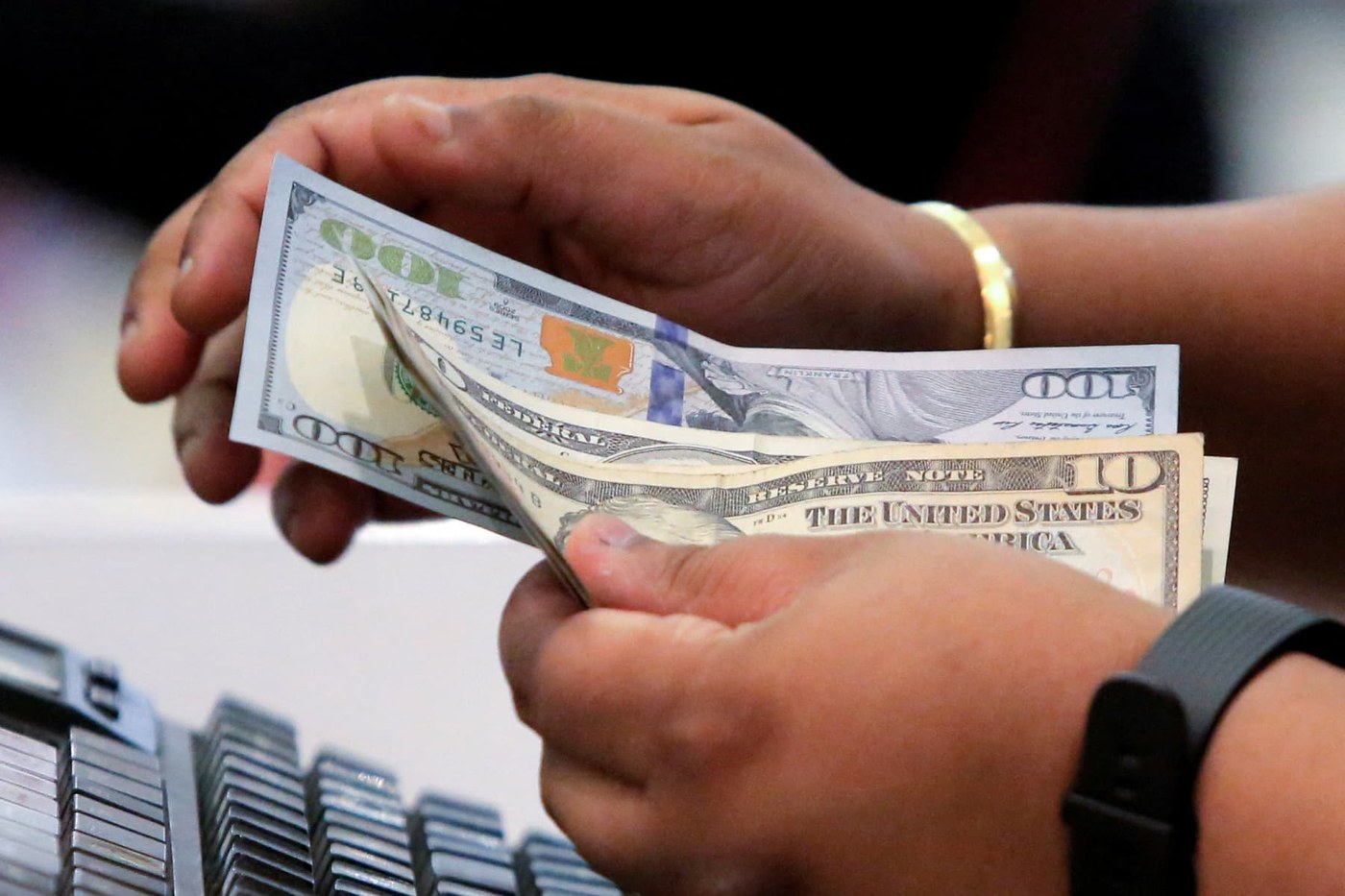
The K-shaped economy has become shorthand for a widening, persistent economic divide: higher-income Americans pulling further ahead — in wealth, spending, and financial security — while many lower-income households struggle to keep up.
"I got sick of hearing about this K-shaped economy," Treasury Secretary Scott Bessent told CNBC's "Squawk Box" earlier this month. "I can say here definitively, the K-shaped economy is over."
"We're seeing more of a 'C' economy where the lower end of wage earners are finally clawing it back," Bessent said.
What is a K-shaped economy?
The "shape" of the economy refers to the shape of the letter.
In a K-shaped economy, for example — a term that emerged during the Covid-19 pandemic — the arm and leg of the K widen, representing divergent experiences for low- and high-earning households.
Some recent data shows wage and spending gaps between most higher-income and lower-income households are beginning to close. In other words, they are starting to converge, like the ends of the letter "C."
That matters because it could signal a meaningful change in the distribution of economic strength, some experts said. Instead of growth being concentrated at the top, gains may be becoming more broadly shared.
For example, lower-income households saw their after-tax wages grow at an average 5.2% annual pace in July, surpassing growth for higher-income households for the first time since December 2024, according to data published this month by the Bank of America Institute.
Debit and credit card spending also converged across income groups last month, according to the think tank.
Lower-income households' spending grew 5.4% year-over-year in July, supported by stronger after-tax wage growth, outpacing spending growth among middle-income households, according to the Bank of America Institute.
Why all households are under financial pressure
But lower-income consumers are not necessarily gaining ground, economists said — challenging the notion of a shift away from a K-shaped economy.
For example, borrowers with low FICO scores — a barometer of consumer credit scores — are showing greater signs of stress.
"For those lowest-scoring consumers, we are seeing slight upticks in the 90-plus delinquency rate for mortgage and auto loans," said Ethan Dornhelm, FICO's vice president of scores and predictive analytics, referring to consumers who are 90 days or more past due on their required payments.
I got sick of hearing about this K-shaped economy. I can say here definitively, the K-shaped economy is over.Scott BessentTreasury Secretary
Many Americans at all income levels are still under pressure, economists said.
Even higher earners "are dialing back some of their spending and being more cautious with how they spend, where they spend their money," said EY-Parthenon chief economist Gregory Daco.
While consumers' concerns about gas prices are easing, housing affordability has emerged as a large source of financial pressure, according to a new report from J.D. Power. Worries over housing costs have nearly eclipsed gasoline prices as the second-largest source of financial stress, behind groceries, it found.
The average first-time homebuyer's monthly mortgage payment hit $2,563, up 57% since April 2019 and far ahead of the 30% general inflation rate over that period, according to FICO's latest Credit Insights report.
Forty-three percent of homeowners said their total monthly housing costs have made it harder to keep up with other expenses, said FICO, which surveyed 2,078 U.S. adults ages 18 and older in July.
The ability to afford a home has declined since the beginning of the year, according to data from the Federal Reserve Bank of Atlanta. Affordability has broadly been depressed since 2022, when mortgage rates started increasing significantly, according to Atlanta Fed data.
Student-loan repayment is another source of strain: 56% of borrowers said it caused them to rely more heavily on credit cards or other loans to stay on top of bills over the past year, according to the FICO report.
Could an X-shaped economy be on the horizon?
Other economists said the economy may be taking on different shapes beyond a "K" or a "C."
For example, an E-shape describes three economic tiers: high-income households, a squeezed middle and a struggling bottom.
An X shape could be next, if lower-income spending growth persistently exceeds that of higher-income spending growth, economists said.
"There is a slight risk of an X developing here," said David Tinsley, senior economist at the Bank of America Institute.
"It seems that lower-income household spending growth could accelerate past higher-income households for a time, and so we could actually be talking about a crossover," he said.
A downturn in the stock market could cause higher-income households, which are more likely to own stocks, to pull back on spending, experts said.
Such a dynamic "could become a key catalyst to slower consumer spending growth and an economy that might be stalling," said Daco of EY-Parthenon.
The alphabet soup of economic labels may have its limits, economists said.
For example, age and life stage may be a more useful way to understand who is feeling the most economic pressure in the months ahead, they said.
Struggling Gen Z consumers in their 20s are very different from Gen X, the mid-career cohort roughly in their mid-40s to early 60s, who are also feeling a financial squeeze, experts said.
Housing costs remain a particular pressure point for younger Gen Z consumers, especially renters, they said.
Meanwhile, "Gen X consumers are supporting their children while also perhaps supporting and helping their parents while also trying to save for retirement," said FICO's Dornhelm.
"I think there might be an age dimension coming into the discussion." Tinsley said, "I think we are kind of broadly done with the alphabet."
SIGN UP: Money 101 is an 8-week learning course on financial freedom, delivered weekly to your inbox. Sign up here. It is also available in Spanish.