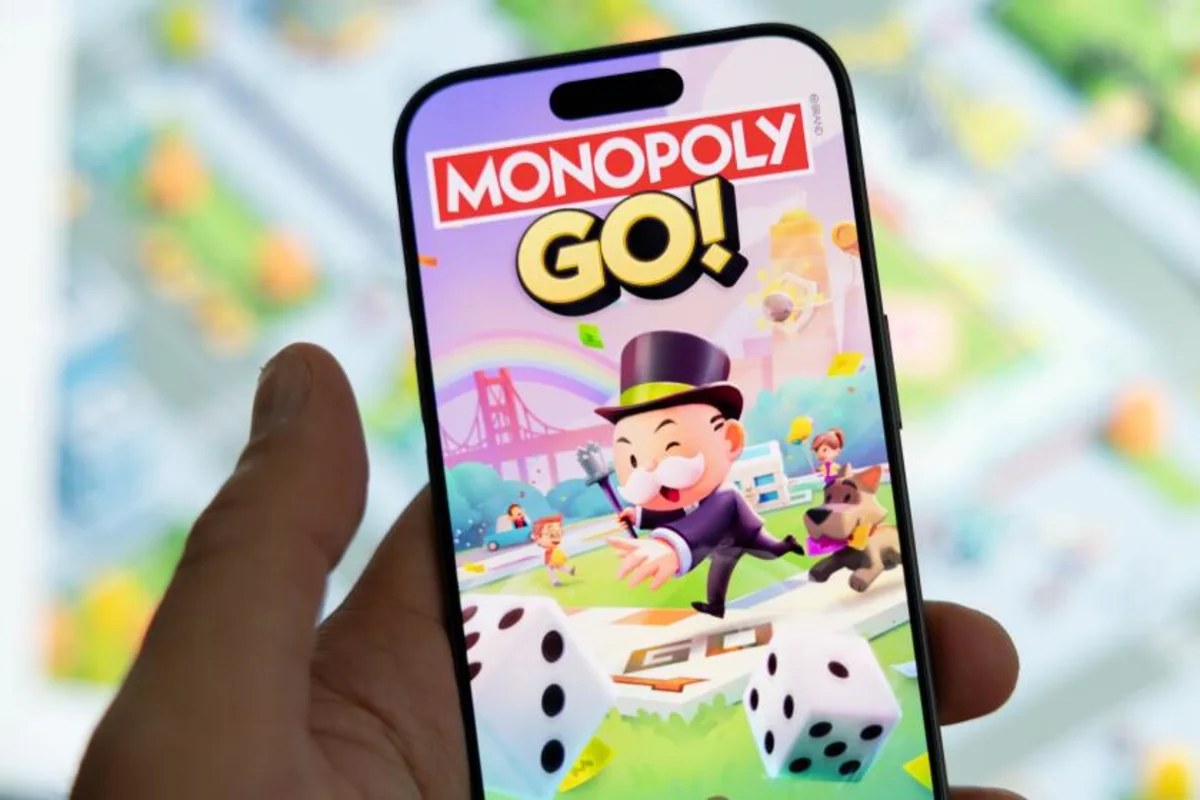
Passing "Go" has become especially lucrative for mobile game publisher Scopely.
The Culver City-based Scopely launched "Monopoly Go!" in 2023, betting fans of the classic board game would flock to a mobile version aimed at casual gamers.
By 2025, "Monopoly Go!" had accrued $6 billion in lifetime in-app purchase revenue, becoming the fastest free mobile game to do so, according to app analytics firm Sensor Tower.
This summer, the app is expected to reach $8 billion in lifetime revenue, the company says, solidifying "Monopoly Go!" as Scopely's biggest game. It will reach that milestone faster than the company's popular "Pokémon Go."
The company, which has offices in London, Barcelona, Shanghai and other cities, declined to disclose its total profits.
As overall downloads in the mobile game market have stagnated and in-app purchases and retention become the main drivers of growth, Scopely has hit on an age-old Hollywood strategy — using known franchises and intellectual property to bring out fans.
"These are incredibly durable and long-lasting games that have really passionate communities and fandom around them," said Javier Ferreira, co-chief executive of Scopely. "We're in the business of building people's favorite thing, and that's a difficult thing to do. The power of [intellectual property] is that, in some cases, that is already their favorite thing."
The company's journey toward "Monopoly Go!" began in 2014, when Scopely formed a partnership with Rhode Island-based toymaker Hasbro. Its first collaboration was a Yahtzee mobile dice game that ultimately drew millions of players worldwide (though it was especially popular in the U.S.) and generated more than $1 billion in lifetime revenue.
After that, Scopely approached Hasbro about taking on the "crown jewel" of its board game empire — Monopoly.
Monopoly's massive global popularity was an obvious draw. But adapting an hours-long real estate transaction game for a casual, mobile audience proved challenging.
Development of what would become "Monopoly Go!" ultimately took seven years, two of which were spent trying to make movement around the board more fun. In that time, the company scrapped two versions of the game; one deemed too competitive, and one that was too complex, Ferreira said.
Developers wanted to capture the "roller coaster feel" of the board game's highs and lows, while also having simple rules and ensuring a strong social element, he said.
"We couldn't just copy," Ferreira said. "We had to reinvent it and re-imagine it, and that's a complicated, creative endeavor."