Oil prices staged their sharpest single-session drop in weeks on Monday after Washington and Tehran paused military strikes over the weekend, but the relief was clouded almost immediately: Houthi forces struck the Saudi Aramco facilities at Jizan and Yanbu on Saturday — attacks that threaten the only export corridor Saudi Arabia has left after Iran closed the Strait of Hormuz five months ago. The fragile halt to hostilities now arrives with two consequential central bank decisions bearing down on global markets: the Federal Reserve's rate decision on Wednesday and the Bank of England's on Thursday.
Brent crude futures fell more than 7% in early London trading Monday, briefly dipping below $90 a barrel for the first time in nearly a week before recovering slightly to $91.08 by 8:04 a.m. GMT, down $5.70, or about 5.9% on the session. U.S. West Texas Intermediate crude dropped about $4.80, or approximately 5.4%, to $84.51 a barrel. Both contracts were at their lowest levels in nearly a week — unwinding part of a rally that had pushed Brent above $100 a barrel just before the weekend.
A Pause, Not a Peace — and What the Distinction Costs Consumers
The U.S. military halted its campaign against Iran beginning late Friday without a formal announcement after 13 consecutive nights of bombing. Iran's government signaled it would suspend its own retaliatory operations so long as Washington held fire, characterizing its stance as "attack for attack." On Sunday, UN Ambassador Mike Waltz told CBS News' "Face the Nation" that President Trump was "giving talks some space" and "giving diplomacy a chance" — while simultaneously noting that additional military assets had moved into the region.
Markets, however, are reading this with the wariness the recent history warrants. PVM analyst John Evans cautioned that the move represents a "questionable mini-ceasefire" rather than a durable resolution, and noted that prices will only fall further if elevated costs suppress demand. That is the critical condition: demand destruction, not diplomacy, may do what negotiations have not.
The reason for skepticism is documented. An April 8 ceasefire announcement sent Brent plunging as much as 15.9% in a single session. Days later, tensions reignited as both sides accused each other of violations, and by July 8, Trump declared the truce "over". The current pause follows 13 nights of intensified U.S. bombing that depleted some U.S. munitions stockpiles, a factor Waltz himself acknowledged while insisting the military retained "everything it needs."
Saudi Arabia's Last Export Route Now Under Fire — and Why a Ceasefire Won't Fix It Fast
Even if the pause holds, the oil market faces structural supply constraints that diplomacy alone cannot quickly resolve. That is the central fact obscured by Monday's price drop.
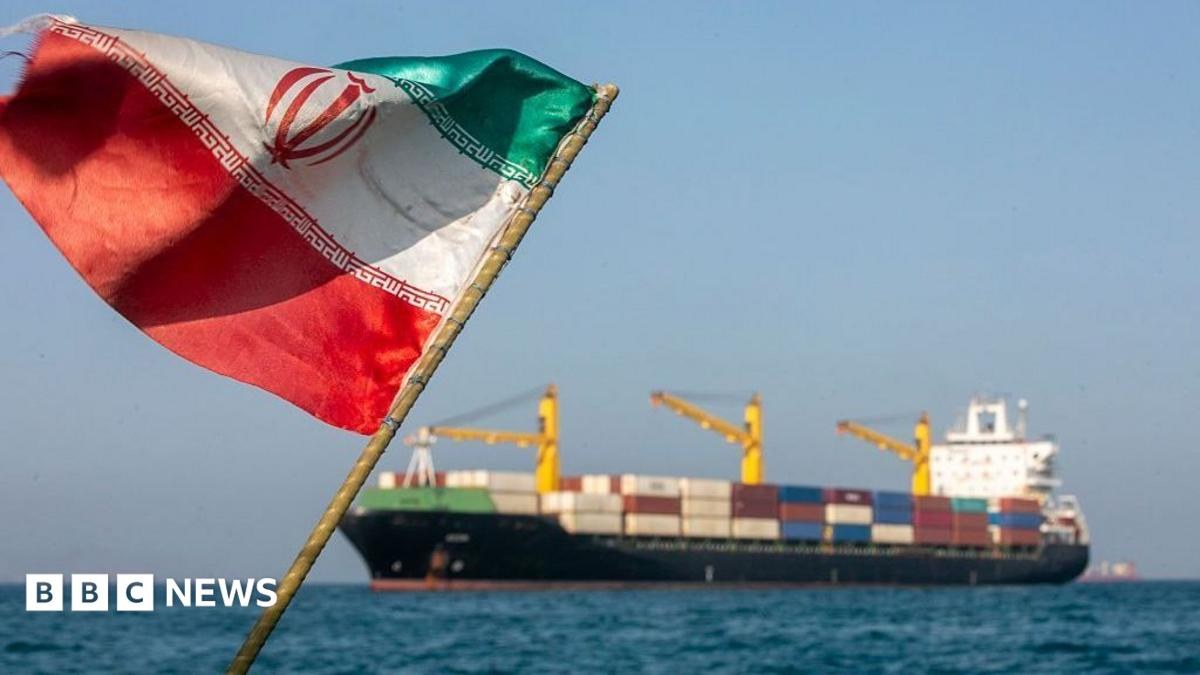
The Strait of Hormuz — the 21-mile-wide waterway between Iran and Oman through which roughly one-fifth of global seaborne oil normally passes — remains effectively closed. Fewer than 10 commodity vessels transited the strait per day over the weekend, compared with roughly 100 per day before the conflict began in late February, according to shipping data from Kpler. MST Marquee analyst Saul Kavonic said that "any rebound in flows through the Strait of Hormuz is likely to prove slow and partial, as many shippers remain wary and will want greater confidence in their safety before they bring more empty ships into the Strait."
Saudi Arabia responded to the Hormuz closure by pushing its East-West Pipeline — the Petroline — to an all-time throughput record of 7 million barrels per day, converting parallel natural gas liquids pipelines to crude service in an emergency adaptation that sacrificed NGL export revenue for raw throughput. That 1,200-kilometer (746-mile) pipeline running from Saudi Arabia's Eastern Province to the Red Sea port of Yanbu became the world's most critical piece of energy infrastructure overnight.
On Saturday, Houthi forces fired ballistic missiles and drones at Saudi Aramco facilities in Jizan and Yanbu — the first direct strikes on Saudi oil infrastructure since 2022. A fire broke out at the Jizan refinery, confirmed by NASA's FIRMS satellite monitoring service. In Yanbu, Greek military personnel operating a U.S.-made Patriot battery intercepted two ballistic missiles, preventing damage to the port that had been handling Yanbu loadings at a record 4.7 million barrels per day as of July 13. Kpler data confirmed that Yanbu accounted for 92% of Saudi Arabia's seaborne crude exports in June 2026.
That is the dual-chokepoint trap: Iran closed Hormuz in February, forcing Saudi Arabia to reroute every export barrel overland to the Red Sea coast; the Houthis then targeted that coast. Every barrel that exits Saudi Arabia via the East-West Pipeline must then transit the Bab el-Mandeb — the 18-mile-wide (29-kilometer) strait at the southern end of the Red Sea that the Houthis now threaten. Losing both routes simultaneously has no historical precedent.
How Many Supply Lines Are Now Broken
The Strait of Hormuz and Saudi Arabia's Red Sea corridor are not the only disrupted supply chains. The damage extends across multiple geographies simultaneously, and that breadth is what analysts say makes this pause different from the April situation — and why "supply scar tissue" will likely keep prices elevated even after hostilities end.
On July 19, Ukrainian drones struck two tankers — the ASIA and the NISSOS IOS — loading Kazakh crude at the Caspian Pipeline Consortium's Black Sea terminal near Novorossiysk. By July 21, CPC had stopped accepting crude from Kazakhstan entirely after a fourth tanker was struck and tanker companies refused to send vessels to the terminal. The Caspian Pipeline Consortium carries roughly 80% to 90% of Kazakhstan's crude exports — approximately 1.48 million barrels per day. That is about 1% of global oil output removed from markets by a separate conflict front.
Ukraine also conducted strikes on Russian oil facilities over the weekend, confirmed by Ukrainian officials.
Societe Generale analysts have estimated that each month without a resolution in the Red Sea adds approximately $10 per barrel to oil prices. Asian buyers have been rerouting Saudi crude through the Suez Canal and around Africa, adding weeks and significant cost to voyages.
The International Maritime Organization has recorded more than 52 maritime incidents involving commercial vessels across the Persian Gulf, Strait of Hormuz, and Gulf of Oman since the conflict began. Iranian Revolutionary Guard Corps small boats and anti-ship missiles have targeted dozens of tankers, and some owners have rerouted cargoes around Africa, adding weeks and significant cost to voyages. The human toll is also documented: at least 12 seafarers have been killed or gone missing, one port worker was killed in Bahrain, and one Saudi energy worker was killed with seven others wounded in attacks on Aramco facilities.
What the Fed and BOE Will Do With a 7% Oil Drop
The oil price move arrives at a pivotal moment for global monetary policy, and the timing matters enormously for anyone holding a mortgage, an energy company stock, or an interest-rate-sensitive asset.
The Federal Reserve's Federal Open Market Committee begins its two-day policy meeting on Tuesday, with a rate decision scheduled for Wednesday at 2 p.m. ET. The Fed has held its benchmark rate at 3.5% to 3.75% since its June meeting, which the FOMC Minutes show resulted in unanimous agreement to hold — with policymakers noting that "inflation remained elevated relative to the Committee's 2 percent goal." Before Monday's oil price drop, surging crude prices above $100 a barrel had pushed the probability of a rate hike at a future meeting to 38%, up sharply from 12% one week earlier, according to CME FedWatch futures market data.
Fed Chair Kevin Warsh has committed to returning inflation to 2% while offering limited forward guidance. "While a July rate hike remains highly unlikely, the September FOMC meeting could become the first meaningful test of whether the recent improvement in inflation proves durable," EY-Parthenon chief economist Gregory Daco said in a July 22 analysis. At the start of 2026, most economists had forecast at least one rate cut this year; energy-driven inflation has since reversed that expectation entirely.
HSBC U.S. rates strategist Dhiraj Narula noted that while higher oil prices had contributed to renewed rate-hike expectations, inflation expectations had remained relatively contained — attributing that to strong Fed messaging on price stability, which prevented the oil shock from feeding into longer-term inflation expectations.
The structural problem that makes this so difficult for policymakers is what economists call stagflation: a supply-driven shock simultaneously raises inflation and slows economic growth, putting the central bank in the position of having to choose which pain to impose on consumers. Raising rates fights inflation but deepens the growth slowdown. A ceasefire that collapses again, as April's did, would erase Monday's disinflationary relief instantly.
The Bank of England is in a comparably constrained position. The Monetary Policy Committee is scheduled to announce its rate decision on Thursday, July 30, at 12 p.m. UK time (7 a.m. ET), alongside a full quarterly Monetary Policy Report. At its June meeting, the MPC voted 7 to 2 to hold Bank Rate at 3.75%, with Huw Pill and Megan Greene dissenting in favor of an immediate increase to 4.00%. UK CPI held at approximately 2.8% in May, but services inflation has risen to 3.7%, keeping the committee on a hawkish footing. Financial markets are now pricing in roughly a 14% probability of a rate hike at Thursday's meeting — a figure that will shift with every oil price update between now and Thursday morning.
UOB analysts summarized the broader risk picture directly: if conflict in the Middle East widens further — encompassing simultaneous disruptions to Red Sea shipping and Russian supply — "sustained disruption would likely keep oil prices elevated and continue to pose upside risks to global inflation."
Can the Pause Hold? What Diplomats Face This Week
The path from Monday's pause to a durable reopening of the Strait of Hormuz is contested on multiple dimensions, and the recent diplomatic record suggests caution. Oman has been mediating, and Iranian and Omani deputy foreign ministers have convened in Tehran to discuss Hormuz shipping. Pakistan and Qatar are also involved in mediation efforts.
Iran has separately signaled its intention to impose fees or supervisory charges on vessels transiting the Strait of Hormuz, a proposal the U.S. has firmly opposed. That structural disagreement — alongside the April precedent of a ceasefire collapsed within days — means shipping industry participants are likely to wait for clear, sustained safety guarantees before returning vessels to Hormuz routes.
This pause also comes with a critical military context that Waltz himself acknowledged: the U.S. military is running lower on some categories of advanced interceptors and precision-guided weapons, a product of the rapid pace of the 13-night bombing campaign combined with prior drawdowns from the Russia-Ukraine conflict and earlier Houthi operations. The military assessment that viable Iranian targets were being exhausted was, according to reporting, a factor in Trump's decision to pause.
For now, oil traders are treating this as relief, not resolution. Whether it holds depends on whether Oman and Qatar can construct a framework that addresses Iran's insistence on a role in Hormuz oversight, the U.S. insistence that the strait remain fully and freely open, and the Houthi campaign that has now opened Saudi Arabia's alternative export route to direct attack.
Frequently Asked Questions
Why are oil prices still elevated even with the US-Iran pause?
The pause in strikes is real, but the constraints on global oil supply are not all controlled by the US-Iran dynamic. Saudi Arabia's normal export route through the Strait of Hormuz remains effectively closed — fewer than 10 commercial vessels per day are transiting the strait, versus roughly 100 before the conflict. The East-West Pipeline that Saudi Arabia uses as a bypass now faces a new Houthi threat at the port of Yanbu, where missile strikes on Saturday targeted Aramco facilities. Separately, Ukraine's drone attacks on tankers at the Caspian Pipeline Consortium's Black Sea terminal have disrupted roughly 80-90% of Kazakhstan's crude exports. Even after a formal ceasefire, rebuilding shipping confidence and clearing unexploded ordnance from Hormuz takes weeks. Oil prices reflect all of that structural supply deficit, not just the daily strike count.
How will the Fed's rate decision Wednesday be affected by Monday's oil drop?
A July rate hike was already considered highly unlikely before Monday's drop — the probability was around 38% for a future meeting, not this one. What changes is the medium-term calculus. If oil prices hold below $95 through Wednesday and the Fed reads Monday's move as the start of a sustained disinflationary trend, Fed Chair Kevin Warsh may soften the hawkish tone in his post-decision press conference. If the drop looks temporary — as April's ceasefire-driven drop turned out to be — the September meeting becomes the next major test of whether the Fed will act. Markets are watching every diplomatic development between now and 2 p.m. ET Wednesday.
What does the Bank of England's Thursday rate decision mean for UK consumers?
The Bank of England's MPC votes on Bank Rate on Thursday, July 30, at 12 p.m. UK time (7 a.m. ET). At its June meeting, the committee held the rate at 3.75% in a 7 to 2 vote — with two members already voting to raise to 4.00%. UK services inflation at 3.7% has kept the committee on alert. If Monday's oil price drop proves durable, the case for an immediate hike weakens, and markets now price only about a 14% chance of a Thursday move. But UK mortgages and business borrowing costs remain sensitive to BOE guidance even when rates hold: a hawkish statement with more dissenters signals hikes are coming, pushing longer-term borrowing costs up regardless of Thursday's vote.
Why can't Saudi Arabia just pump more oil to replace the disrupted supply from Iran and Kazakhstan?
Saudi Arabia is already operating its East-West Pipeline at its maximum engineered capacity — 7 million barrels per day, achieved only by converting natural gas liquids pipelines to crude service in an emergency adaptation. The oil gets to the coast; the problem is getting it onto tankers and out of the Red Sea. The Bab el-Mandeb — the 18-mile-wide strait at the southern end of the Red Sea — is the only exit, and it is now under active Houthi threat. Yanbu, where Saudi Arabia's tankers load, was targeted by Houthi missiles on Saturday. Even with full pipeline throughput, the exit point is contested. That engineering constraint — maxed-out pipeline, contested port, threatened exit strait — is what keeps supply tight regardless of how quickly US-Iran diplomacy progresses.
ⓒ 2026 TECHTIMES.com All rights reserved. Do not reproduce without permission.