Tech stocks in the U.S. steadied Friday after suffering one of their worst routs in years, as investors weighed the prospect of an AI investment slowdown against future gains following broad Democratic victories in the midterms.
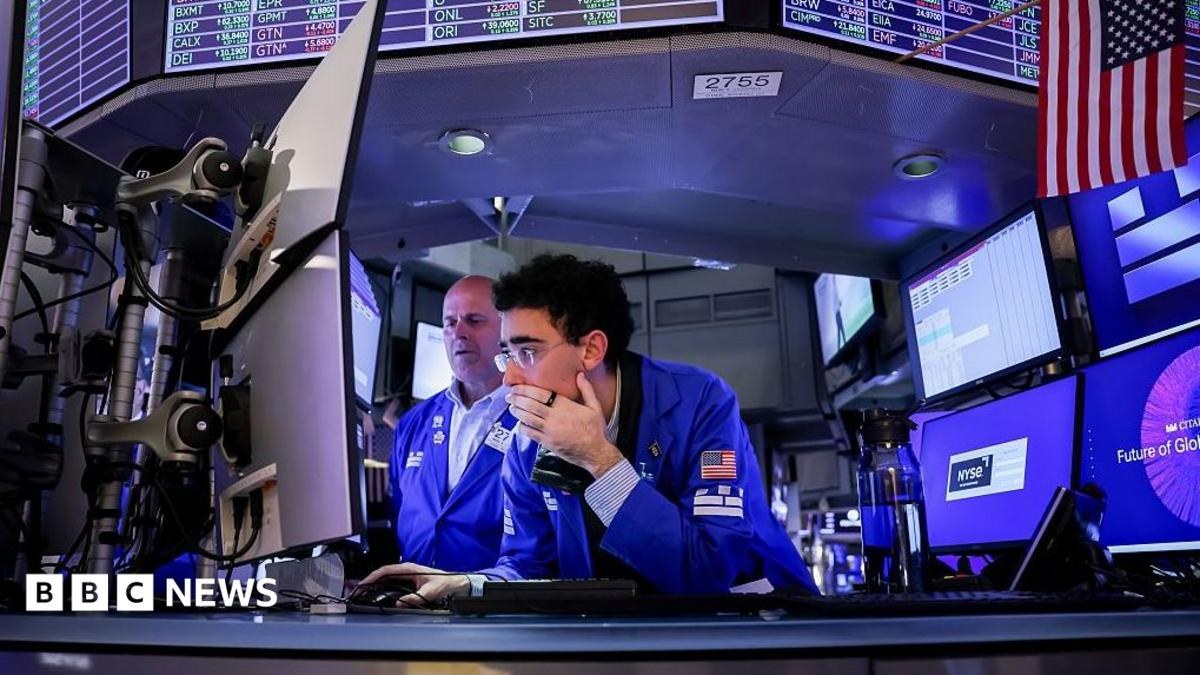
By midday, tech-focused Nasdaq 100 rose 1.9% after plunging 6.3% Thursday, its worst single-day performance since the Covid-19 pandemic.
The broader S&P 500 was nearly 1% higher after tanking 4.4% Thursday, wiping out $2.8 trillion in paper wealth.
Investors continue to digest the results of Tuesday’s midterms that swept a crop of anti-AI and data center opponent politicians into office, including Gov.-elect Gina Hinojosa in Texas, among the largest data center markets in the country. The AI boom has comprised an ever-increasing share of stock gains and economic growth writ-large, making markets increasingly susceptible to any threat to the narrative.
“Markets are being punished according to their dependence on the U.S. AI infrastructure cycle,” Charu Chanana, chief investment strategist at Singapore-based SAXO Markets, told NBC News in emailed comments.
The newly Democrat-controlled Congress could also tighten scrutiny of the industry, including AI infrastructure projects, which could cause delays and additional costs, adding to worries investors have about the profitability of these investments.
Some analysts viewed Thursday’s dramatic sell-off as overblown — or at least, merely a sign of some froth coming off an overstretched market rather than the end of the line for the AI investment wave.
In a note to clients Friday, economist and longtime market watcher Ed Yardeni called recent declines “just speed bumps” that may be helping prevent the AI bubble from over-inflating, and that buying opportunities may already be preventing themselves.
Still, he acknowledged risks remain, namely the extent to which AI data centers get delayed or canceled outright.
Volatility is likely to continue until it becomes clearer how much data center construction is truly threatened by newly elected lawmakers.
“This is a stock market that is trying to figure out the right valuations for the AI trade, which is grappling with a swift sentiment shift after the midterm elections,” Alex Guiliano, chief investment officer at New Jersey-based Resonate Wealth Partners, said in a statement.
Asian markets in trouble
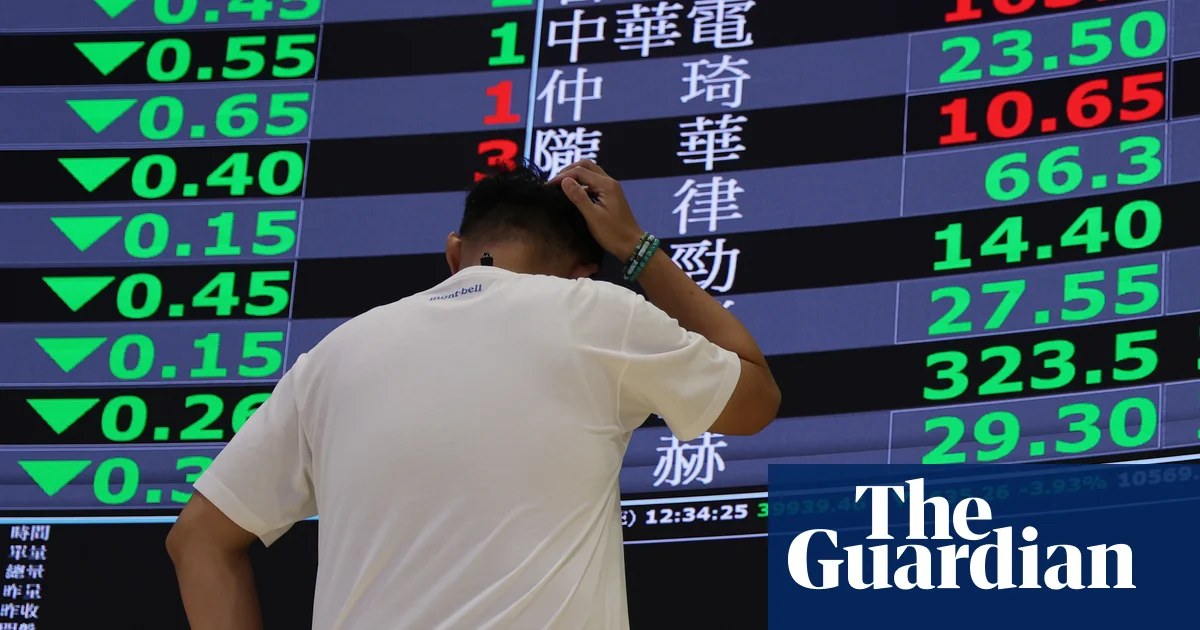
Friday kicked off with steep losses in Asia. Japan’s Nikkei suffered its worst week since 2020, falling as much as 6% and more than 20% since its most recent high, putting it in bear-market territory. South Korea’s Kospi index tumbled more than 8%, triggering a temporary market-wide trading halt. There, AI data center memory suppliers Samsung and SK Hynix plunged more than 10% in the early hours, before recovering some of their losses.
In Taiwan, home to some of the most critical AI companies, including chip supplier TSMC, the benchmark TAIEX index dropped 9%.
The companies in Taiwan, South Korea and Japan are linked to the global AI spending cycle and “hence I am not surprised to see the magnitude of correction today following the sharp correction in the U.S.,” Tai Hui, J.P. Morgan’s APAC chief market strategist, told NBC News in emailed comments.
The months leading up to the American elections had already been a rollercoaster for Asian investors, who saw their fortunes soar in June during the AI stock boom, but have been suffering from a brutal recent sell-off.
A sense that valuations of key AI companies were inflated was troublesome enough for markets in Asia, but the Democratic sweep has introduced another layer of uncertainty.
Markets had largely expected losses for Trump’s Republicans, but not on this scale.
“This matters enormously for Asia because much of the hardware supporting America’s AI ambitions is manufactured here,” Chanana, from SAXO Markets, said.
In China, both the tech-focused Star 50 and the AI Index slumped as much as 5% before recouping some losses.
“There is a legitimate argument that parts of China’s AI equity bubble have already burst,” Chanana said.
But she added that unlike the U.S., where much of the investment is commercially driven, “China treats AI and semiconductor self-sufficiency as strategic national priorities.”
“This means investment can continue for reasons beyond immediate profitability, including technological independence, industrial competitiveness and national security.”
That is not the case in South Korea, whose market darlings, memory makers SK Hynix and Samsung, are an integral part of the commercial AI buildout. That makes the country particularly sensitive to any U.S. slowdowns.
South Korea’s benchmark Kospi index more than doubled in market value in June, but by Friday had shed most of the gains made this year. Like South Korea, there is acute exposure for Taiwan — key for advanced chip manufacturing and TSMC’s headquarters.
Nevertheless, most of the Asian indexes are still higher than they were a year ago: South Korea’s Kospi is up 25%, Japan’s Nikkei 225 is up 13%, and TSEC Taiwan Technology is also up by 47%.
“For semiconductor and memory makers in Asia Pacific, as long as global demand for computing power continues to grow, demand for the underlying hardware should remain healthy over the medium term,” J.P. Morgan’s Hui said.
“There may be constraints on where the ‘gold’ can be mined, but as long as demand for the gold remains, the picks and shovels will still be needed elsewhere,” he added.