- Published
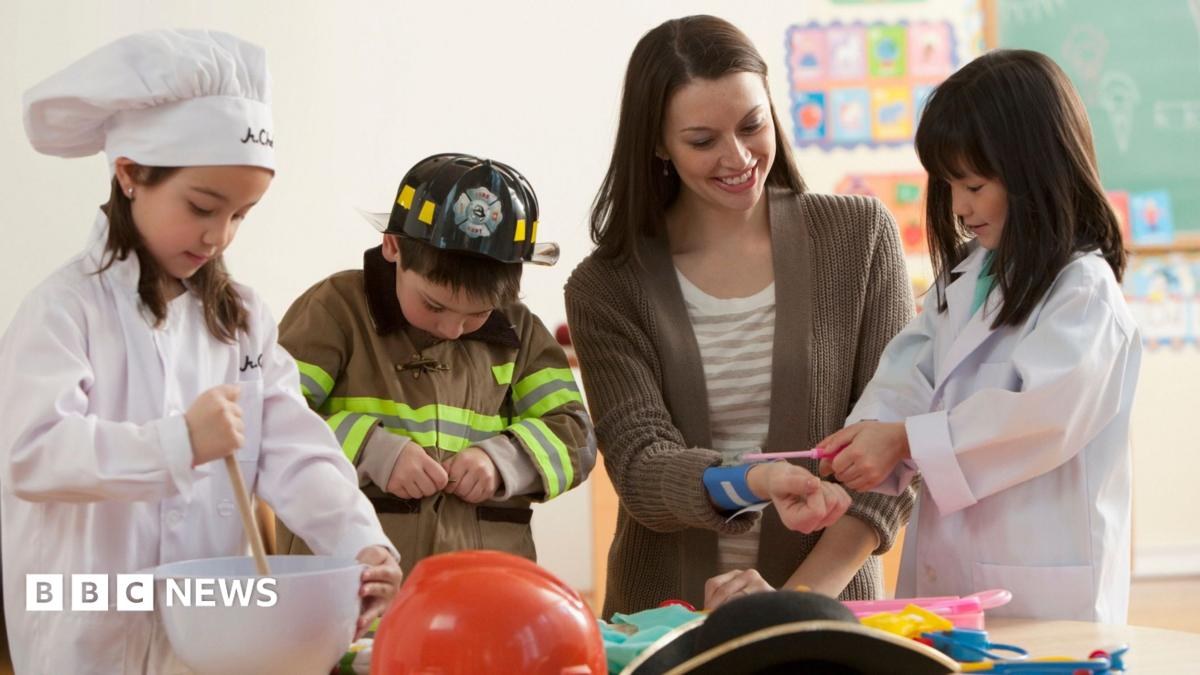
Children should be introduced to the world of work at the start of primary school, says the author of a major report into youth activity in the UK.
Former minister Alan Milburn says children as young as four should be learning about different careers, with work experience placements made mandatory for 14- to 16-year-olds.
However, teaching unions warn of the "significant pressure" already facing primary schools and say practical considerations must ensure all schools have access to the support.
The latest data from the Office for National Statistics (ONS) suggests 981,000 people aged 16 to 24 in the UK were not in education, employment or training (known as Neet), between April and June 2026.
Milburn told the BBC "in primary school, it's really about opening their eyes and giving them a sense about what is possible".
Despite a push towards apprenticeships and work experience in Years 10 and 11, for many the journey towards becoming Neet starts well before their 16th birthday.
As a result, Milburn says children should be introduced to the world of work much earlier in their school journey, with dedicated space in the curriculum to "broaden horizons".
He told the BBC this could be achieved by employers giving talks in primary schools and offering taster sessions to children.
"It'd be good if employers came into schools and said, 'Look, this is what's going on, these are things that are possible.'"
Milburn says that for Key Stage 4 pupils - aged between 14 and 16 - experience must be given in a real workplace with employer feedback.
"Work experience needs to be mandatory. It makes a big difference," he told the BBC.
Milburn also emphasised the difficulty some young people face when trying to find work experience placements.
"There are about four in ten people aged 14-16 who aren't getting any work experience at all," he said. "In other schools, students are told to go off and find their own work experience and that often relies on the network of Mum and Dad."
These recommendations are due to be published in the final instalment of his government-commissioned report into the issue, which is expected to be published in the autumn.
Education is devolved in the UK, so while Milburn's review looks at the picture in all four nations, his recommendations regarding education are specific to England.
Currently in England, careers guidance must be offered to students aged 11-18 and work experience is not statutory.
The government has said its vision, external is to "guarantee two weeks' worth of work experience for every young person" in England.
In both Scotland and Wales, career-based learning is already a requirement in schools for students as young as three.
Emma, from Kirklees, has grandchildren in Years 1, 2 and 4 and thinks primary school is too young to be introducing careers talks.
"In primary school, there is too much trying to get little kids to grow up too quickly," she says.
"Just let them be little kids. I know they have to learn and the world's changing, but still, give them a chance to be kids."
"I think it's a good idea," she says. "It's something that everyone has to do, so if you learn early, it's something they don't have to learn later on."
Teaching unions have responded positively to the idea of introducing career-based learning into schools at a younger age, but have warned about the burden this could place on primary schools in particular.
Paul Whiteman, general secretary of school leaders' union National Association of Head Teachers (NAHT), warns of the "significant pressure" already facing primary schools.
"Whenever new mandatory requirements are proposed, it is important to be clear about what might have to give way to make room for them," he says.
Whiteman also highlights the value of existing programmes such as "Primary Futures", which bring in volunteers from different professions into schools to "challenge stereotypes and raise aspirations".
"The earlier young people can begin to make connections between what they learn in school and the possibilities that lie ahead, the better," Whiteman says.
Pepe Di'Iasio, general secretary of the Association of School and College Leaders (ASCL), says having someone come into the classroom can really "enlighten [children's] motivation... and give them that sense of passion for all the opportunities beyond the classroom". Although he acknowledges that finding opportunities in rural areas could be more challenging.
Get in touch
Are you affected by issues covered in this story?
Related topics
-
- Published17 September